
When someone in your area searches for a dentist, your practice needs to be easy to find, easy to trust, and easy to contact. That is what local SEO helps you achieve. It connects your dental practice with people nearby who are actively looking for a checkup, dental implants, teeth whitening, emergency care, or another service you provide.
In 2026, local SEO for dentists is about more than adding your city name to a website. You need an accurate Google Business Profile, useful treatment pages, consistent business information, genuine patient reviews, and a website that works well on mobile. These pieces work together to improve your visibility in Google Search and Google Maps.
This guide explains how to build a practical local SEO strategy for a dental practice in the United States. Whether you run a family dental office, a cosmetic dentistry practice, or a multi-location group, you can use these steps to attract more relevant local traffic and turn more searches into appointment requests.
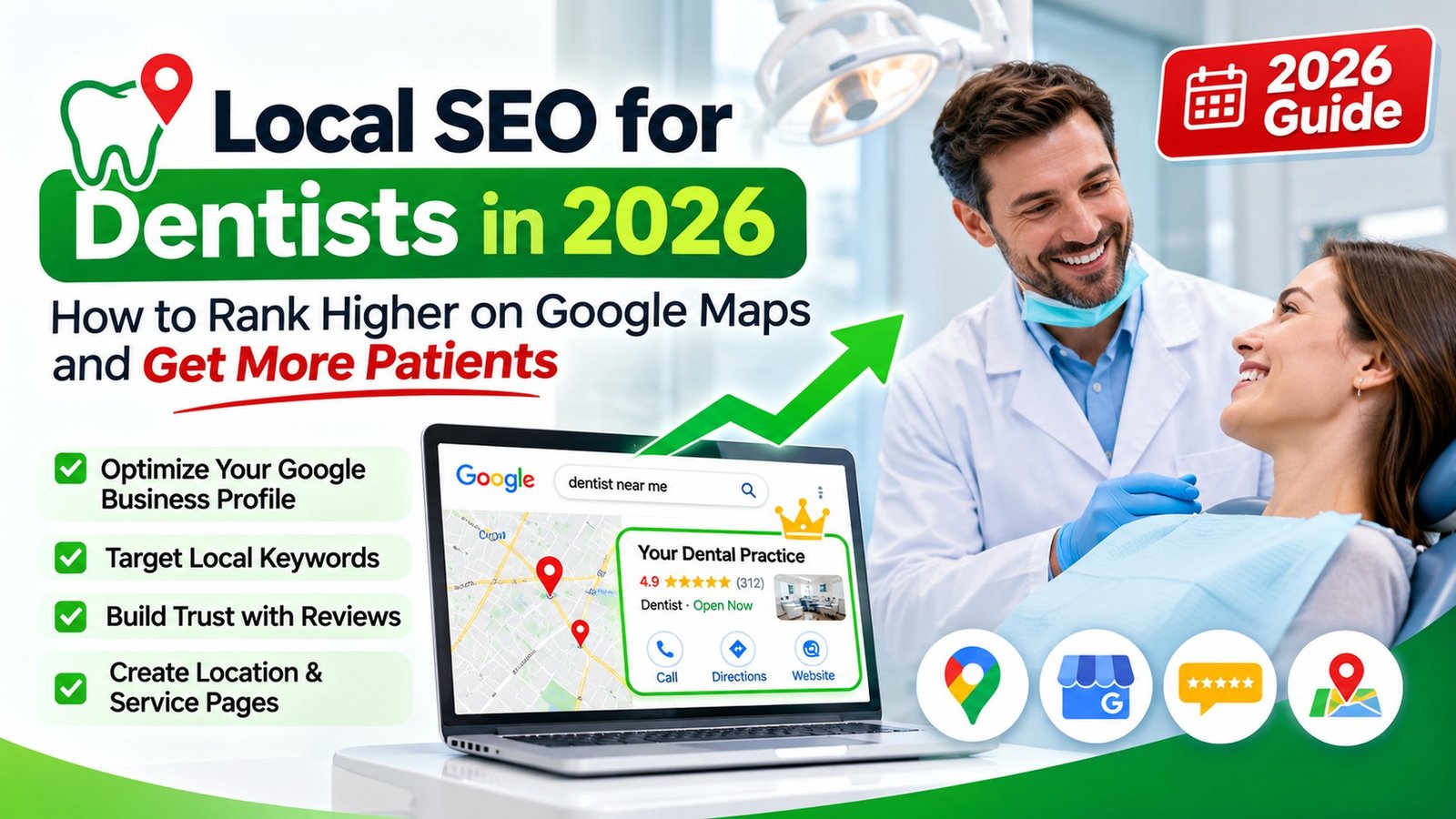
What Is Local SEO for Dentists?
Local SEO for dentists is the process of improving your dental practice’s visibility when people search online for dental care in a specific area. These searches often include a city, neighborhood, ZIP code, or phrases such as dentist near me and emergency dentist open now.
Local visibility can come from two main places: Google Maps and the local results in Google Search, as well as regular organic website listings. Your Google Business Profile helps people discover your office, while your website gives them more detail about your services, experience, location, and next steps.
Google says local results are mainly based on relevance, distance, and prominence. Relevance is how well your business matches a search. Distance is how close your office is to the searcher. Prominence reflects how well-known your practice is, including signals such as reviews and links from other websites. You cannot control a searcher’s distance, but you can improve the accuracy, relevance, and reputation signals around your practice. Read Google’s local ranking guidance.
1. Optimize Your Google Business Profile
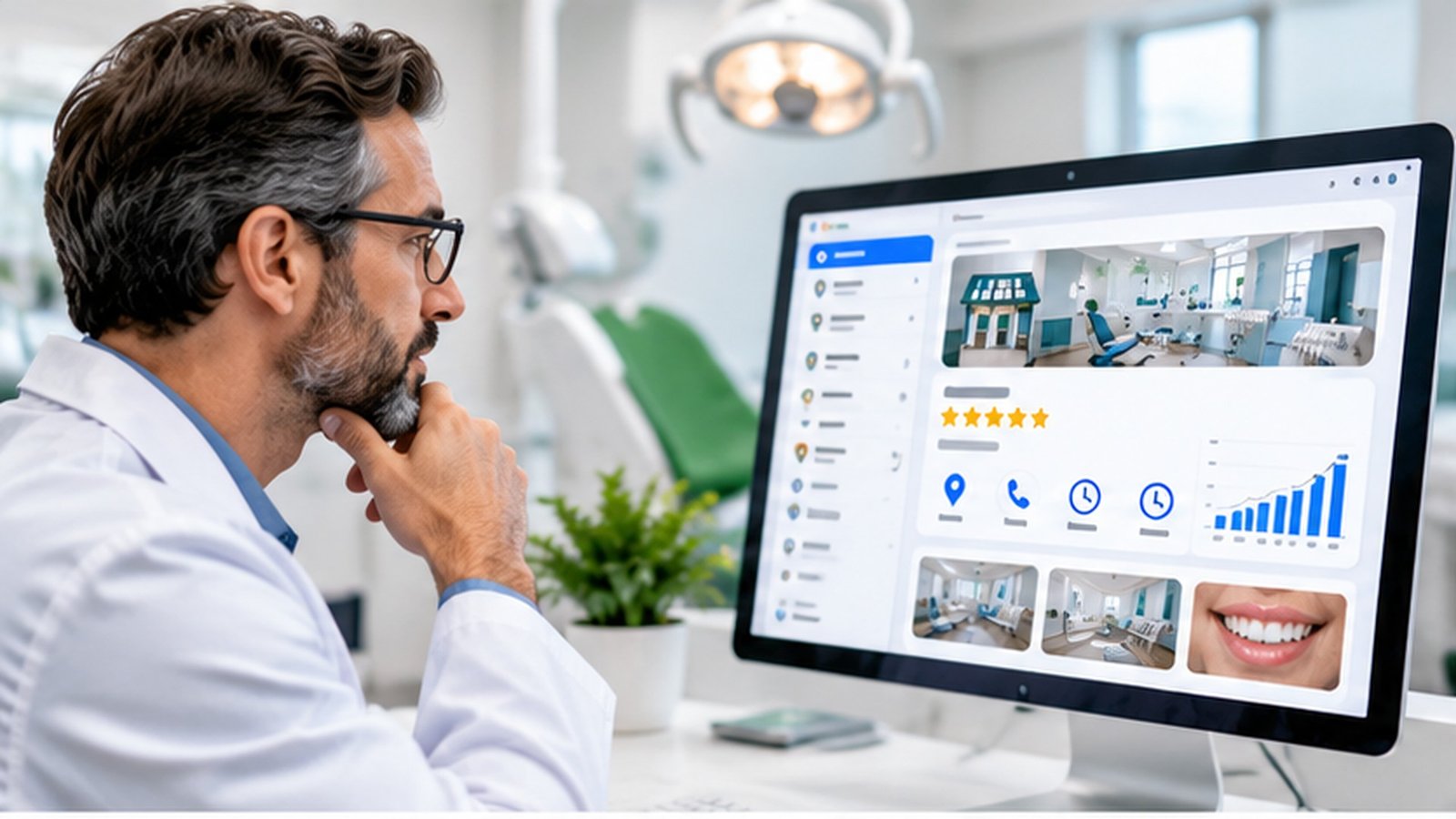
Your Google Business Profile is one of the most important parts of local SEO for dentists. It can show your practice name, address, phone number, hours, website, photos, reviews, and directions directly in Google Search and Maps. An incomplete or inaccurate profile can make it harder for potential patients to choose you.
Complete every important business detail
- Use your real practice name. Do not add extra keywords, city names, or service phrases unless they are genuinely part of your real-world business name.
- Choose the most accurate primary business category available, such as Dentist. Add only relevant secondary categories that accurately describe your practice.
- Enter your correct street address, local phone number, website URL, and regular business hours.
- Add special hours for holidays and days when your office is closed.
- List the dental services you actually provide, such as preventive care, dental crowns, root canals, orthodontics, or dental implants.
- Upload real, high-quality photos of your office, reception area, treatment rooms, team, and exterior signage.
Keep your profile details consistent with the information on your website and other trusted business listings. Follow Google’s Business Profile guidelines when choosing categories, names, and address details.
Keep the profile useful and current
Review your profile regularly. Update hours when they change, replace outdated photos, and make sure the website and appointment links work. You can also use Google Business Profile posts to share practice updates, patient information, and announcements. Focus on useful information rather than repeating keywords.
2. Target the Right Local Dental Keywords
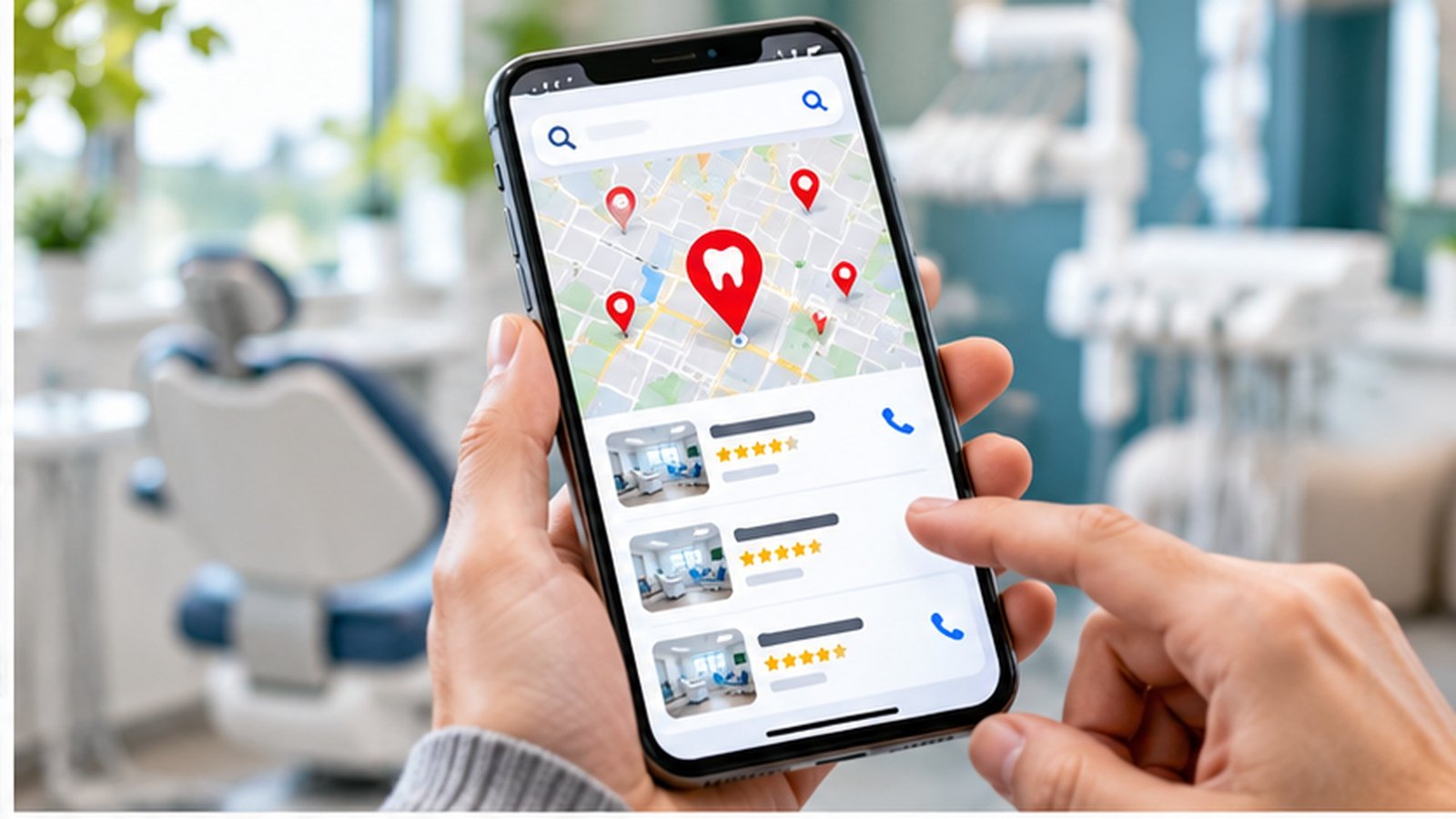
Keyword research helps you understand how nearby patients search for dental services. A useful strategy combines broad local terms with specific treatment searches and questions patients ask before booking.
Build keyword groups around services and locations
- Core local terms: dentist near me, dentist in [city], family dentist [city].
- Treatment terms: dental implants [city], teeth whitening [city], emergency dentist [city].
- Patient-intent terms: same-day dentist [city], new patient dentist [city], affordable dental cleaning [city].
- Question-based terms: how much do dental implants cost, how long does a dental crown last, what should I do about a toothache?
Use these phrases naturally in page titles, headings, service descriptions, and helpful content. Do not force the same keyword into every paragraph. Search engines and patients both benefit from clear, specific writing.
Look beyond search volume. A phrase such as dental implants in [city] may bring fewer searches than dentist, but it can attract people who already know what treatment they want. Prioritize keywords that match the services your practice wants to grow.
3. Create Dedicated Pages for Your Dental Services
A single page listing every treatment is rarely the best way to explain your practice. Create a dedicated page for each major service you offer. This gives patients a clear place to learn about the treatment and helps search engines understand the topics your website covers.
For example, a general dental practice might create separate pages for dental implants, emergency dentistry, cosmetic dentistry, teeth whitening, root canal treatment, dental crowns, and family dentistry.
A strong treatment page should explain what the service is, who may need it, what a typical visit involves, and how a patient can request an appointment. Include the practice’s relevant experience and explain any options that are genuinely available at your office. For medical and dental information, have qualified dental professionals review the content before publication.
Make each page locally relevant
Mention the actual communities your practice serves where it is useful to patients. Include your office location, directions, parking information, nearby landmarks, and practical details about scheduling. Avoid creating dozens of nearly identical city pages that only swap one place name for another. Each location page should offer original, useful information about a real office and the patients it serves.
4. Build Trust with Genuine Patient Reviews

Reviews influence how people compare dental practices. They can also contribute to your practice’s prominence in local search. Google says that more reviews and positive ratings can help local ranking, but there is no guaranteed review count or rating that will put a practice in the top three.
Create a simple, consistent process for asking patients to share honest feedback after an appointment. You can provide a direct review link by email, text, or a printed follow-up card. Make the request neutral: patients should feel free to leave either positive or negative feedback.
- Ask for feedback from real patients after genuine visits.
- Never buy reviews, write reviews for patients, or offer rewards in exchange for positive ratings.
- Reply professionally and courteously to reviews, including critical feedback.
- Do not confirm that someone is a patient or reveal treatment details in a public response.
- Use private channels to resolve concerns that require discussing personal or health information.
Patient privacy matters. A public reply should never disclose protected health information. Keep responses brief, respectful, and general. Your review process should follow applicable privacy requirements and professional rules.
5. Keep Your Local Citations Accurate
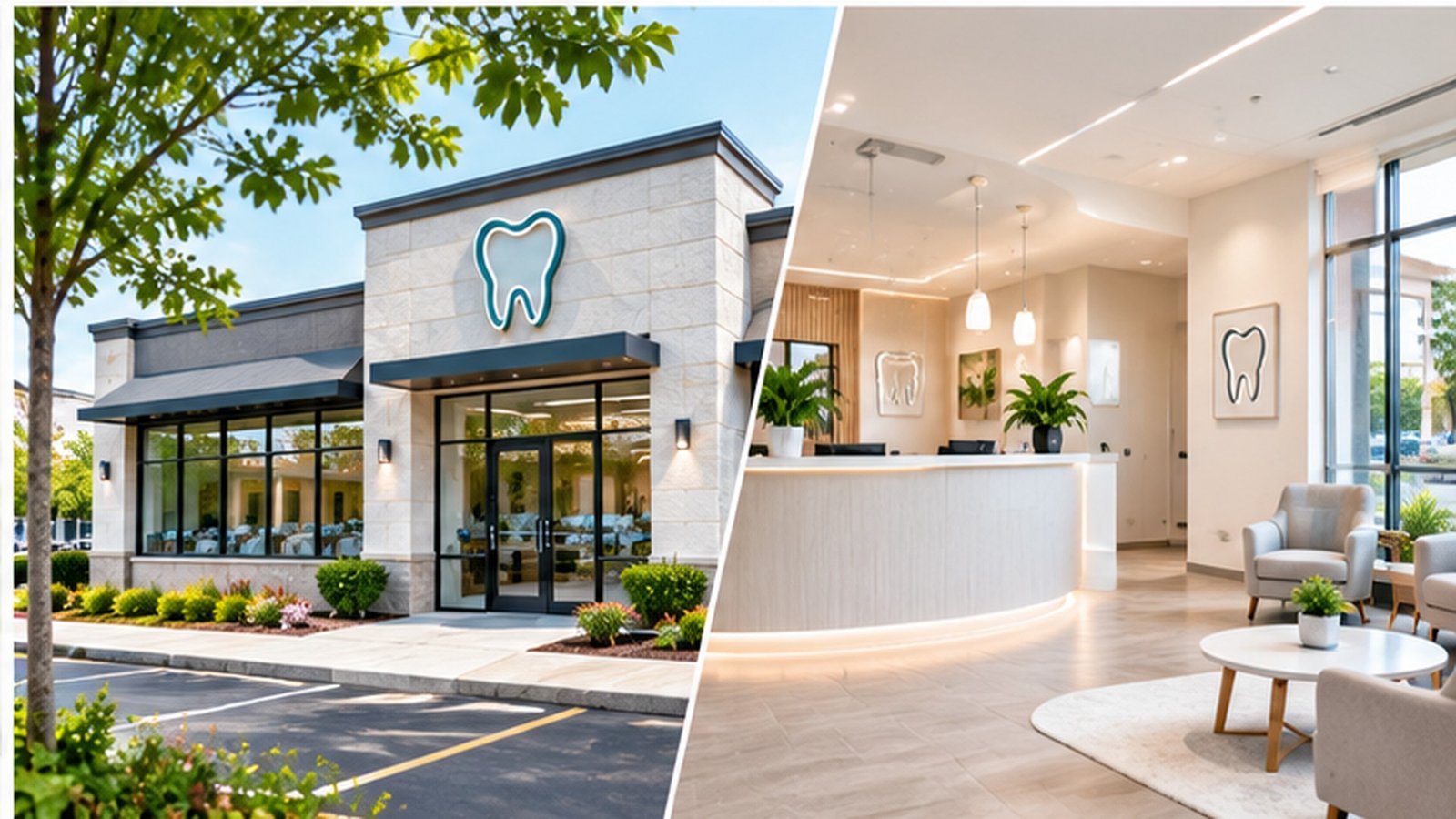
A local citation is an online mention of your practice’s name, address, and phone number. Citations may appear in business directories, healthcare platforms, professional associations, and local community websites.
For a dental office, start with accurate listings on major platforms that patients use, such as Apple Maps, Bing Places, Yelp, and relevant healthcare directories. Also check your local chamber of commerce, dental association, and insurance or provider directories where applicable.
Your practice name, address, and phone number should match across important listings. If you move offices, change phone numbers, or update your business name, make a plan to correct the old information. Duplicate or outdated listings can confuse patients and make it harder for search engines to connect information about your practice.
6. Improve Your Website for Local Search and Mobile Visitors
Many people search for a dentist on a smartphone. Your website should load quickly, display clearly on smaller screens, and make it easy to call or request an appointment.
- Show your practice name, address, phone number, and office hours in an easy-to-find place.
- Add a clear call-to-action such as Request an Appointment or Call Our Office.
- Make phone numbers tap-to-call on mobile devices.
- Include an accurate map and directions to each physical office.
- Use descriptive page titles and headings that explain the service and location.
- Compress images, use secure HTTPS, and fix broken links and confusing navigation.
- Make forms short, accessible, and appropriate for the information you need to collect.
Technical SEO also matters. Search engines need to be able to crawl and index your important pages. Use a logical site structure, submit an XML sitemap, fix indexing issues in Google Search Console, and make sure each important page has a clear, unique title and meta description.
7. Use Local Business Structured Data
Structured data is code that helps search engines understand details about a business and the content on a page. A dental practice website may use relevant LocalBusiness structured data to describe its real-world business details, including its name, address, and other supported information.
Use accurate information that is visible on the website and keep it consistent with your Google Business Profile. Structured data does not guarantee a higher ranking or a special search result. Validate your implementation and follow Google’s Local Business structured data documentation.
8. Measure Results That Matter to Your Practice
Rankings are useful to monitor, but they are not the final business goal. A local SEO campaign should help your practice attract relevant prospective patients and generate more appointment opportunities.
Track performance using Google Business Profile performance data, Google Search Console, website analytics, and your practice’s call or appointment records. Useful metrics include:
- Calls and website visits from your Google Business Profile.
- Requests for directions and clicks to your appointment page.
- Organic clicks and impressions for local service searches.
- Visibility across the neighborhoods and ZIP codes that matter to your practice.
- Qualified phone calls, form submissions, and booked appointments.
- New patient inquiries and the services they ask about.
Review the data regularly and look for patterns. If a treatment page receives traffic but few appointment requests, improve its content and calls to action. If your practice is visible for branded searches but not for service searches, strengthen the relevant service pages and local signals.
A Practical 30-Day Local SEO Checklist for Dentists
You do not need to change everything at once. Use this simple plan to build a stronger foundation over the next month.
Week 1: Fix the foundation
- Verify ownership and accuracy of your Google Business Profile.
- Check your business name, primary category, address, phone number, hours, and website link.
- Review your website’s contact details and mobile experience.
Week 2: Improve your website
- Research local keywords for your most important dental services.
- Improve your main service pages and add missing treatment pages.
- Add clear appointment calls to action and useful location information.
Week 3: Strengthen trust and citations
- Create a compliant process for requesting honest patient reviews.
- Respond to existing reviews without revealing patient information.
- Correct important directory listings and remove or update outdated details.
Week 4: Measure and refine
- Review Google Business Profile and Search Console performance.
- Check mobile speed, indexing, broken links, and page titles.
- Set a monthly schedule for content updates, review monitoring, and local listing checks.
Common Local SEO Mistakes Dental Practices Should Avoid
- Adding city names or service keywords to the Google Business Profile business name when they are not part of the real business name.
- Choosing irrelevant business categories to try to appear for more searches.
- Publishing thin, duplicate location pages with little value for patients.
- Buying reviews or pressuring patients to leave only positive feedback.
- Using the same generic treatment description on every service page.
- Ignoring mobile usability, slow pages, or broken appointment links.
- Responding to reviews in a way that reveals a patient relationship or private health details.
- Measuring success only by one keyword ranking instead of calls, inquiries, and booked appointments.
Frequently Asked Questions
How long does local SEO take for a dental practice?
There is no fixed timeline. Results depend on your market, competition, website condition, location, and the work already completed. Some profile improvements can be made quickly, while stronger organic visibility and reputation signals usually take ongoing effort. Track progress over several months rather than expecting a guaranteed result by a specific date.
Does Google Business Profile help dentists rank on Google Maps?
Yes. A complete and accurate Google Business Profile helps Google understand the practice and match it with relevant local searches. Google says local results are mainly based on relevance, distance, and prominence. A profile alone cannot guarantee a top position.
How important are reviews for dental local SEO?
Reviews matter to patients and can contribute to local prominence. Focus on earning genuine feedback consistently, responding professionally, and protecting patient privacy. Do not buy reviews or offer incentives for positive ratings.
Should a dental practice create a page for every city nearby?
Only create a location page when it serves a real audience with useful, original information. A page for a real additional office can explain that location’s services, team, directions, and contact details. Avoid doorway pages that simply repeat the same content with different city names.
What is the most important first step in local SEO for dentists?
Start by checking your Google Business Profile and your website’s core business information. Make sure the practice name, address, phone number, hours, categories, and services are accurate. Then improve your service pages, reviews process, and local citations.
Ready to Improve Your Dental Practice’s Local Visibility?
A strong local SEO strategy helps patients find the right information when they are choosing a dentist. Start with an accurate Google Business Profile, build useful pages for the treatments you provide, earn genuine reviews, and keep your business information consistent across the web.
If your dental practice needs help improving Google Maps visibility, local rankings, citations, or service-area pages, contact LocalSEO.BD to discuss a local SEO plan based on your locations, competition, and growth goals.
Suggested next step: Audit your Google Business Profile and your five most important treatment pages before investing in more content.